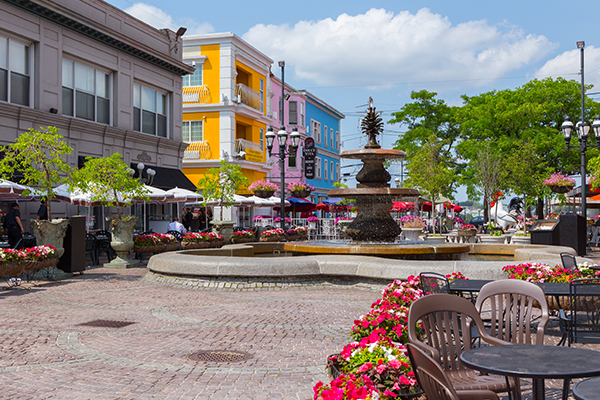
Historic Newport Mansions of Rhode Island
The Newport Mansions are among the most iconic, culturally significant landmarks in Rhode Island. Built during America’s Gilded Age, these expansive estates once served as summer homes for some of the nation’s wealthiest families—including the Vanderbilts and Berwinds. Today, they offer a rare look into architectural history, generational wealth, and the preservation of family legacies—topics that continue to resonate deeply with Rhode Island residents planning for their own futures.

Whether you are exploring these storied homes for the first time or seeking a deeper appreciation for Newport’s historic identity, the mansions reveal an intricate narrative of craftsmanship, luxury, and community heritage.

The Gilded Age Legacy of Newport

During the late 19th and early 20th centuries, Newport emerged as a premier destination for America’s elite. Wealthy industrial families built elaborate summer “cottages”—a modest term for homes that often spanned more than 100 rooms. These estates were designed not only for comfort but also to symbolize status, permanence, and prosperity.

The mansions reflect a blend of European architectural influence and American innovation. Many estates incorporated marble imported from Italy, tapestries from France, and decorative styles inspired by Renaissance and Baroque design. They also featured technological advancements considered groundbreaking at the time, including early electrical systems, heating innovations, and sophisticated servant-staff infrastructure.

For Rhode Islanders today, these properties represent more than ornate architecture—they embody the region’s commitment to preserving history and protecting multi-generational assets.

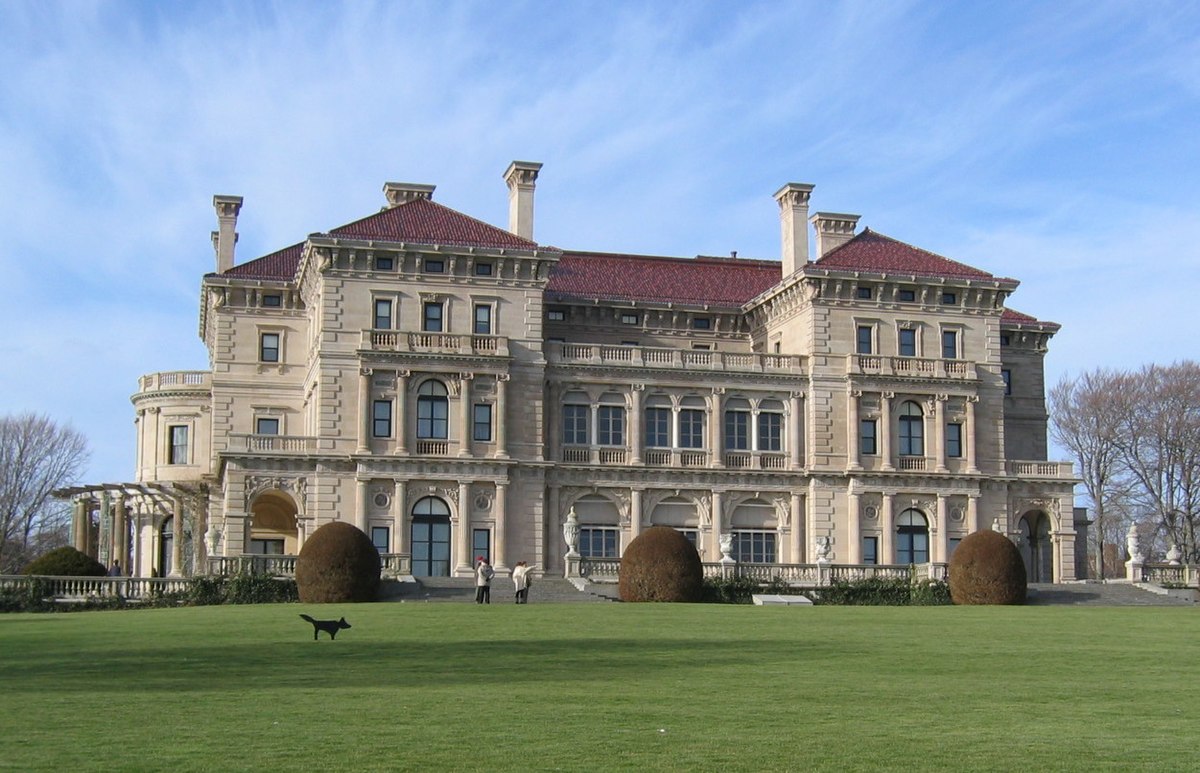
The Breakers: A Testament to Vanderbilt Wealt

Image credit: User:Itub, CC BY-SA 3.0, via Wikimedia Commons

Perhaps the most famous of Newport’s mansions, The Breakers was commissioned by Cornelius Vanderbilt II and completed in 1895. Designed by Richard Morris Hunt, the estate features:

  • Seventy rooms overlooking the Atlantic coastline

  • Lavish interior materials such as gilded ceilings and imported marble

  • A meticulously landscaped 13-acre property

Today, The Breakers is a National Historic Landmark and one of the most visited attractions in Rhode Island. It stands as a powerful example of how prominent families safeguarded assets for future generations—an enduring reminder of the importance of long-term planning.

For modern families, especially those holding real estate or family businesses, the Vanderbilt legacy underscores how thoughtful planning can preserve wealth and property well into the future. If you have inherited property or are preparing for succession, our estate planning guidance can help you protect what matters most.

Marble House: Architectural Grandeur with Political Influence

Constructed as a gift from William K. Vanderbilt to his wife Alva, Marble House is one of the most architecturally significant mansions in Newport. Completed in 1892, it contains more than 500,000 cubic feet of marble—a remarkable achievement even by today’s standards.

Alva Vanderbilt hosted political gatherings on the estate’s grounds, contributing to the women’s suffrage movement. The property remains an important symbol of the era’s cultural evolution and the role prominent families played in shaping American society.

Image credit: xiquinhosilva, CC BY 2.0, via Wikimedia Commons

For Rhode Island homeowners, Marble House illustrates the longevity of well-maintained property and the importance of documenting ownership, succession, and preservation. These themes often arise in wills, trusts, and estate planning, particularly for families who own historic homes or multigenerational real estate.

Rosecliff: A Celebration of Art, Design, and Entertainment

Rosecliff was built for silver heiress Theresa Fair Oelrichs and is known for its symmetrical design and expansive ballroom. Modeled after the Grand Trianon at Versailles, the mansion was designed to host large-scale social events and gatherings.

Over the years, Rosecliff has gained recognition beyond architectural circles. It has served as a filming location for several major motion pictures, contributing to its place in popular culture. Today, the estate remains a prominent venue for exhibitions, educational programs, and historical tours.

Rosecliff reflects how Newport’s mansions functioned as centers of cultural exchange, blending art, design, and social life in ways that shaped the city’s reputation.

Preserving Rhode Island’s Historic Estates

The Newport Mansions are stewarded by the Preservation Society of Newport County, an organization dedicated to maintaining these architectural treasures and sharing them with the public. Their work includes structural restoration, archival research, and educational outreach. To learn more about their ongoing preservation efforts, explore the official website.

In addition to mansion tours, the surrounding landscapes—such as the Cliff Walk—offer access to coastal views that frame these estates within Newport’s natural environment. Together, the mansions and their surroundings provide a comprehensive view of Rhode Island’s architectural and social history.

Through ongoing preservation, these landmarks continue to serve as educational resources and cultural touchstones, ensuring that future generations can understand and appreciate Newport’s historical significance.

The Legacy of Brown University in Providence
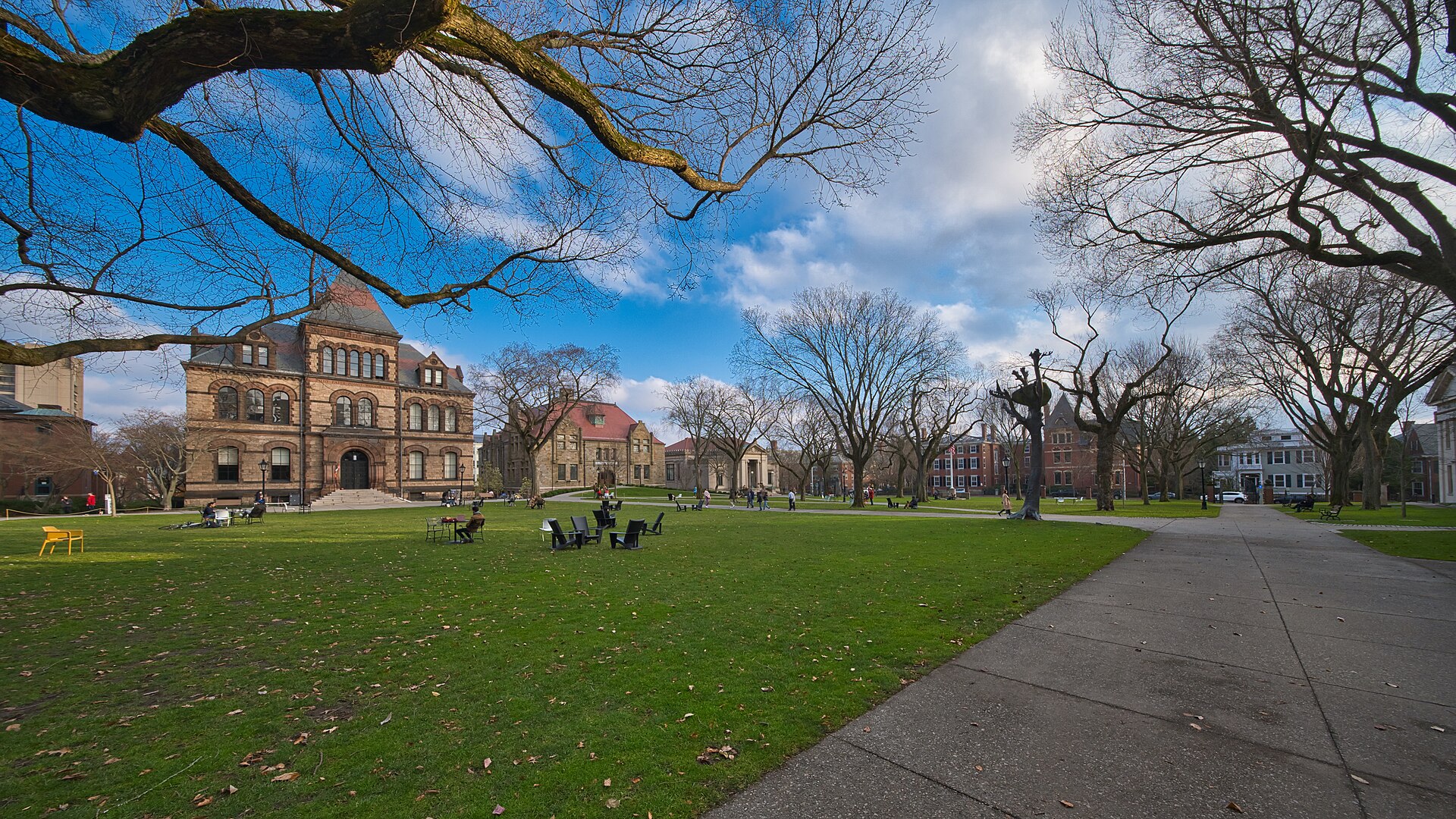
The Main Green at Brown University in Providence, Rhode Island

Brown University has shaped Providence for more than 250 years, leaving a legacy that reaches far beyond its hilltop campus into the city’s economy, culture, and civic life. From its colonial founding to its role as a modern anchor institution, the university and the city have grown up together in ways that define Providence’s identity today.

Early roots on College Hill

Founded in 1764 as the College in the English Colony of Rhode Island and Providence Plantations, Brown University is one of the oldest institutions of higher education in the United States and the seventh-oldest college in the country. Initially located in Warren, Rhode Island, the college moved to Providence in 1770, where John and Moses Brown purchased a four-acre lot on the crest of College Hill to establish a permanent campus that would soon become a defining feature of the city’s skyline.

The university adopted the name Brown University in 1804 in honor of benefactor Nicholas Brown, cementing its identity within the community and linking the institution directly to one of Providence’s most prominent families. From the start, the campus was interwoven with the surrounding eighteenth- and nineteenth-century neighborhoods, creating a dense urban fabric where academic buildings, historic homes, and local businesses coexisted.

A tradition of openness and academic innovation

Brown’s legacy in Providence is also intellectual and social, grounded in a long-standing commitment to openness and academic experimentation. In the eighteenth century, the institution was chartered as a Baptist college, but it became the first Ivy League school to accept students from all religious affiliations, reflecting Rhode Island’s broader tradition of religious tolerance and pluralism.

Over the nineteenth and twentieth centuries, Brown distinguished itself through curricular innovation and an emphasis on student autonomy, developments that enhanced Providence’s reputation as a forward-thinking academic hub. Today, the university’s Open Curriculum and research strengths continue to draw students, faculty, and visitors from around the world, channeling fresh ideas, talent, and investment into the city each year.

Image credit: Chris Rycroft, CC BY-SA 2.0, via Wikimedia Commons

Economic engine and anchor institution

As Providence’s economy has evolved, Brown has become one of the city’s most important employers and economic anchors. The university notes that it injects hundreds of millions of dollars into the local economy annually through payroll, purchasing, construction, and visitor spending. Brown is also the largest institutional landowner in Providence, with significant holdings on College Hill and in the Jewelry District, reinforcing its long-term stake in the city’s physical and economic development.

Beyond its tax-exempt status, Brown’s economic impact includes formal agreements with the city to provide substantial voluntary financial support. Under memoranda of understanding and agreement finalized in 2023, the university committed to $303 million in voluntary payments and community contributions between 2024 and 2043, making it the largest voluntary financial contributor to Providence. These payments, combined with ongoing construction investments and sponsored research spending, help stabilize municipal finances and fuel job growth in sectors from healthcare and technology to construction and services.

Community partnerships and urban impact

Brown’s legacy in Providence is equally visible in its community engagement and neighborhood partnerships. The university emphasizes priorities such as economic growth, educational access, and civic collaboration, positioning itself as a partner in addressing local challenges rather than an institution apart from the city. Brown supports Providence Public Schools, funds scholarship opportunities for local high school graduates, and works with more than 1,000 local companies and vendors each year, helping small businesses and nonprofits thrive.

Campus expansion—especially in the Jewelry District—has transformed former industrial spaces into research, medical, and innovation corridors that attract startups, labs, and creative enterprises. With a commitment to employing union labor on large construction projects, Brown’s building program supports thousands of regional tradespeople while reshaping key urban districts in ways that align with citywide development goals.

Image credit: Kenneth C. Zirkel, CC BY-SA 3.0, via Wikimedia Commons

Cultural influence and global reputation

Culturally, Brown brings a global lens to Providence while elevating the city’s presence on the national and international stage. Alumni and affiliates of the university include Nobel laureates, Pulitzer Prize winners, Rhodes Scholars, prominent public officials, and leaders in science, arts, and business, many of whom maintain ties to Providence through philanthropy, research partnerships, and civic initiatives. Their achievements reinforce the perception of Providence as a place where innovation and creativity flourish.

Brown’s museums, lectures, performances, and public programs also serve residents well beyond the campus borders, offering access to art, ideas, and scholarship that might otherwise be reserved for larger metropolitan centers. In recent decades, the university has confronted its own historical ties to the transatlantic slave trade, commissioning a landmark “Slavery and Justice” report and creating the Center for the Study of Slavery and Justice and a campus memorial, actions that have influenced wider conversations about memory and justice in the city.

Brown and Providence: A shared future

The legacy of Brown University in Providence is ultimately a shared story of mutual transformation: a historic college that helped shape a capital city, and a city that continues to define the university’s character and responsibilities. Brown’s role as an economic driver, community partner, and cultural catalyst ensures that its decisions resonate far beyond College Hill, influencing how Providence grows, invests, and imagines its future. As collaborative agreements deepen and new generations of students arrive, the connection between Brown and Providence is poised to remain a central force in the region’s identity for decades to come.

For individuals and families in Rhode Island who are thinking about how education, legacy, and long-term planning fit together, partnering with a trusted local professional can be just as important as choosing the right academic path. If you have questions about protecting your family’s future, planning for business succession, or aligning your assets with your values, an experienced estate planning attorney such as Jill M. Santiago can help you take the next step with clarity and confidence.

Roger Williams Park in Providence, RI: A Cultural Landmark
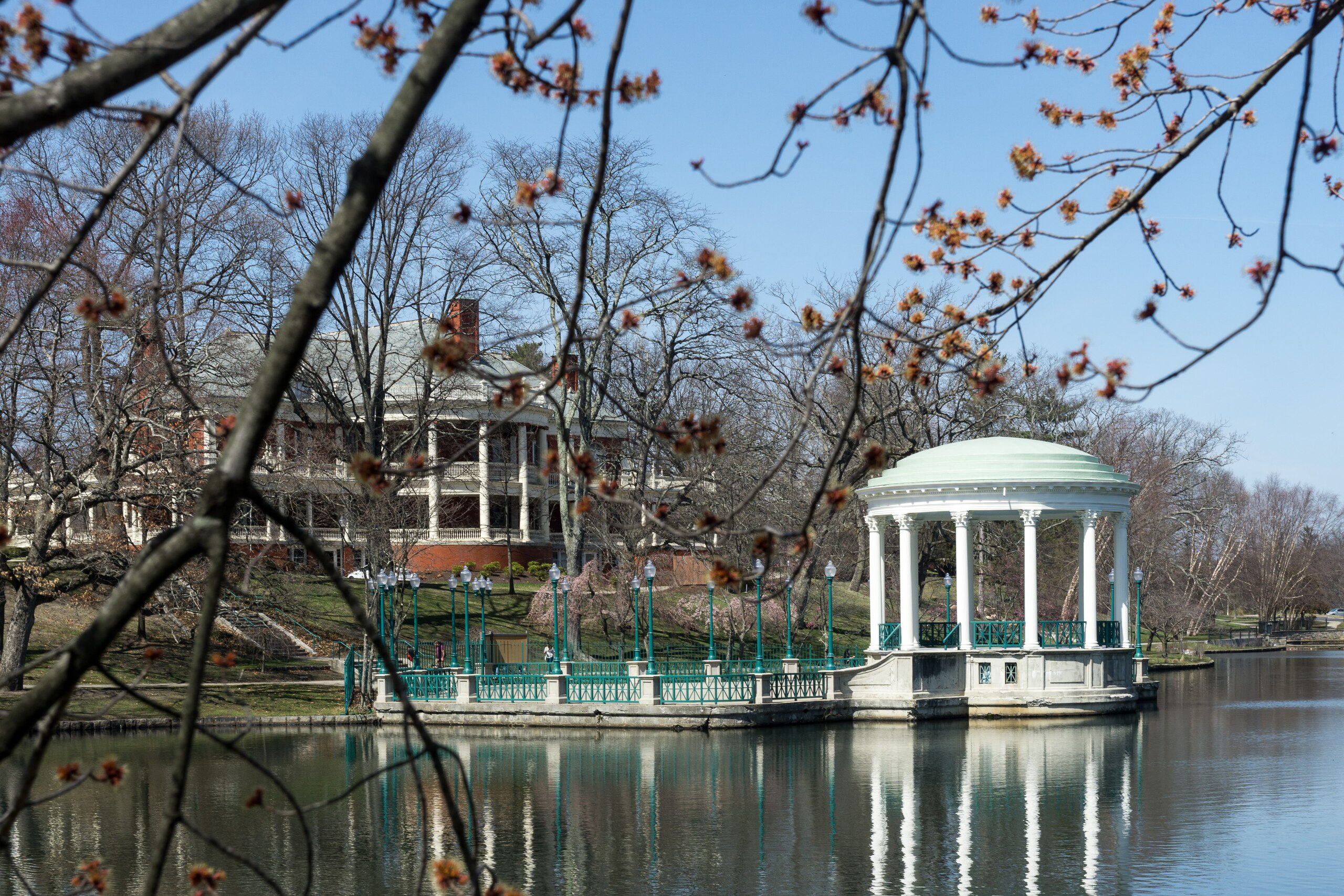
Bandstand and Casino, Roger Williams Park, Providence, Rhode Island

Roger Williams Park in Providence, Rhode Island, stands out as an expansive urban oasis where history, nature, and community life intersect, making it one of New England’s most significant cultural landmarks. Spanning more than 400 acres of water, woodlands, gardens, and cultural institutions, the park functions as both a daily retreat for residents and a destination for visitors from across the region.

Origins and Historical Significance

The story of Roger Williams Park begins in 1871, when Betsey Williams, a descendant of Rhode Island founder Roger Williams, bequeathed her family’s homestead and surrounding land to the City of Providence for use as a public park. This gift included property that traced back to land originally granted to Roger Williams by Narragansett leaders Canonicus and Miantonomo, rooting the park in the early history of religious freedom and Indigenous relations in New England.

During the late 19th century, Providence embraced the national movement for large urban parks and steadily expanded the site. What began as roughly 100 acres of farmland and woodland grew into a landscaped park of more than 400 acres, offering city residents fresh air and recreation as industrialization transformed the surrounding neighborhoods.

Bandstand and Casino, Roger Williams Park, Providence, Rhode Island

Image credit: Kenneth C. Zirkel, CC BY-SA 4.0, via Wikimedia Commons

Landscape Design and Natural Beauty

To shape the new park, Providence hired noted landscape architect Horace W. S. Cleveland in the 1870s. Cleveland’s design emphasized curving roads and paths, clustered tree plantings, and carefully framed views over ponds and lawns, aligning Roger Williams Park with the picturesque ideals seen in other major 19th‑century parks.

Today the park encompasses about 427–435 acres, including more than 100 acres of interconnected ponds that form islands, peninsulas, and varied shorelines. Visitors find rolling lawns, mature specimen trees, rose and Japanese‑style gardens, and wooded walking trails that offer a sense of retreat just minutes from downtown Providence. Seasonal color from flowering trees and annual plantings reinforces the park’s role as a year‑round backdrop for photos, picnics, and quiet reflection.

Cultural Institutions and Attractions

One of the park’s defining qualities is the concentration of cultural institutions within its boundaries. These attractions turn a simple walk in the park into an immersive experience in science, conservation, horticulture, and family fun.

Major features include the Roger Williams Park Zoo, among the oldest zoos in the United States, which houses over 100 species and hosts popular events like the Jack‑O‑Lantern Spectacular and holiday light displays that draw visitors from across the Northeast. The Museum of Natural History and Planetarium adds another layer of discovery with tens of thousands of fossils, minerals, and cultural artifacts, alongside educational astronomy programs for school groups and families.

The Roger Williams Park Botanical Center, one of the largest indoor botanical gardens in New England, showcases tropical and desert plants in expansive greenhouses, complemented by outdoor demonstration gardens. Carousel Village contributes a nostalgic touch with a classic carousel, playgrounds, and seasonal activities, reinforcing the park’s identity as a family‑friendly destination.

Events, Festivals, and Community Life

Roger Williams Park doubles as a major stage for Providence’s cultural calendar, particularly around the Temple to Music and other open lawns. Free and low‑cost events range from fitness walks and birding programs to concerts, movie nights, charity runs, and food festivals, keeping the park lively in every season.

The Temple to Music, a grand open‑air classical pavilion overlooking the water, is a focal point for large community celebrations. Festivals such as Juneteenth RI, the Dominican Festival & Parade, and Festival Guatemala bring thousands of people to the park with live music, dance, traditional foods, and cultural exhibits that highlight the city’s diverse communities. These gatherings turn the park into a shared outdoor living room where cultural heritage is celebrated in a highly visible, inclusive setting.

Roger Williams Park Conservancy

Image credit: ​DLP via Tripadvisor

Recreation, Restoration, and Stewardship

Recreational opportunities in the park extend well beyond walking paths and playgrounds. Visitors can rent swan boats, kayaks, electric boats, or join pirate‑themed and amphibious “duck boat” tours that glide across the interconnected lakes, offering new perspectives on the park’s bridges, islands, and wildlife. Designated walking trails ranging from short loops to longer lake circuits give joggers, bird‑watchers, and families structured ways to explore different corners of the landscape.

Over the past decade, significant investments have focused on preserving and enhancing this historic resource. A major campaign led by the Rhode Island Foundation and the Roger Williams Park Conservancy funded projects such as improved entrances and wayfinding, bridge and Casino repairs, pond restoration to improve water quality, and expanded bike and pedestrian infrastructure. These efforts balance historic preservation with contemporary needs, ensuring the park remains safe, accessible, and ecologically resilient for future generations.

For visitors who fall in love with Providence and Warwick and begin thinking more seriously about their long‑term plans in Rhode Island, partnering with a local professional can make future planning much smoother.

A Living Cultural Landmark

Roger Williams Park is listed on the National Register of Historic Places as a historic district, recognizing its blend of 19th‑century landscape design, architecturally significant structures, and enduring social role. Yet its status as a cultural landmark comes just as much from daily use and evolving traditions as from official designations.

With more than a million visitors each year, the park functions as Providence’s cultural heart: a place where school groups explore science and history, families share picnics and boat rides, artists and performers take the stage, and diverse communities gather to celebrate their heritage. In connecting past and present across its ponds, paths, and pavilions, Roger Williams Park continues to embody Providence’s identity as a city that values open space, cultural expression, and shared public life.